Improvement Lab
Continuous improvement is the innovative, collaborative space between the outcomes we strive towards and our current state.
Continuous Improvement
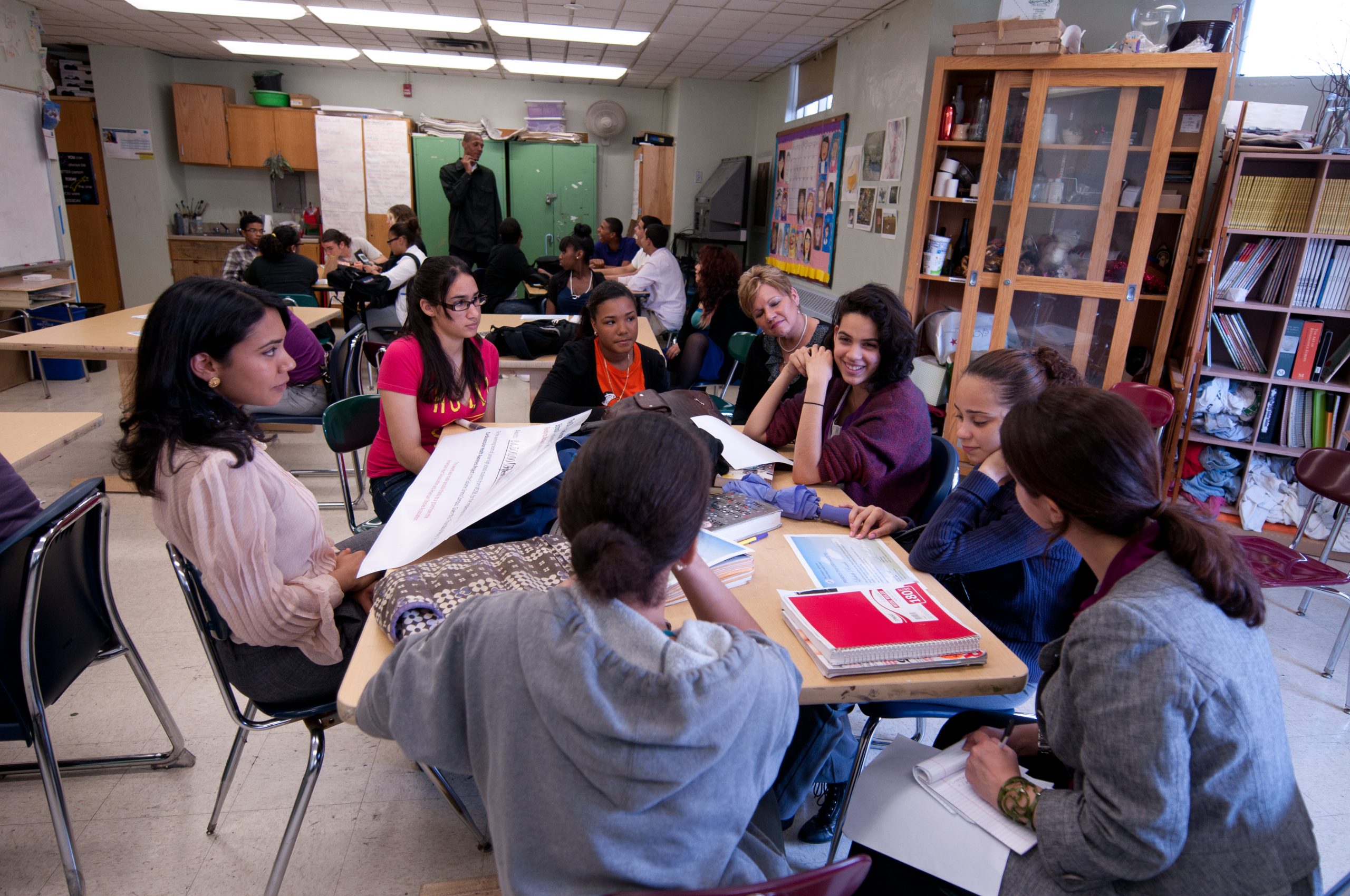
This site is dedicated to helping build your team’s capacity to adapt and adopt this practice in your Community School.
Learn From Our Journey
The “Improvement Lab” initiative, funded by the Bill and Melinda Gates Foundation and launched by the National Center for Community Schools, aimed to empower Community School Directors (CSDs) with the necessary skills and tools to include continuous improvement in their practice. The project utilized group sessions, individual check-ins, and the New Visions for Public Schools Data Portal to increase student attendance, expand continuous improvement practices, and encourage successful school-community partnerships.
Start Here
Explore the Improvement Lab Facilitator Guides to get your team started and use our readiness assessment to gauge where to start building capacity.
RESOURCES:
Facilitator Guides | Readiness Assessment
"For me, continuous improvement is an intention of always improving your strategies - trying things out, failing, but keep trying, WINNING and making sure that is the winning strategy. As a culture, the world, and people evolve, so should your strategies."
Jermaine Small, Community School Director & Improvement Lab Participant
Understanding the Problem
Dedicate time to defining your problem to drive the right innovations.
RESOURCES:
Root Cause Analysis: Carnegie Fishbone Diagram facilitator agenda
Empathy Interviews: Article with tools
Digging Deeper Template can be used to map out your key questions and methods for understanding the problem
"We learned the fishbone concept through our involvement with improvement lab .... it was to be able to take a moment to pause before jumping to solutions and really narrowing down and asking those deeper why questions"
Shannon Heffernan, Assistant Community School Director, Whitney Young Jr. Campus
Plan
Set your goals, analyze data, and create an action plan.
RESOURCES:
Planning Template
Change ideas can come from research, colleagues, or brainstorming. Generate new change ideas collaboratively with a Brainwrite activity or an Exemplar Review of existing resource
Use prompts to work through your draft plan with a colleague
Tuning Protocol to get and receive feedback from colleagues on your plan, or preliminary ideas
"For me, continuous improvement is an intention of always improving your strategies - trying things out, failing, but keep trying, WINNING and making sure that is the winning strategy. As a culture, the world, and people evolve, so should your strategies."
Jermaine Small, Community School Director & Improvement Lab Participant
Do
Implement your action plan and monitor the identified improvements to drive change.
RESOURCES:
During implementation, collect essential data on participation, services, and feedback to inform your study. It doesn't have to be complicated. Watch this Principal discuss an example in the video clip.
"This is the part we are all anxious to get to, but it is important to keep the focused on capturing the data and not make changes on the fly"
Jorge Blau, Improvement Lab Facilitator
Study
In the initial analysis, you will bring together your archival data, resource inventory and asset map to determine where the needs and assets overlap and generate further questions and data needs.
TASKS:
- Convene Advisory Council to review the Archival Data
- Identify the top five high priority needs that emerge from the review and indicate them on the Initial Analysis Worksheet
- Brainstorm particular questions that should be considered for the survey, interview and focus group steps
- Identify the key stakeholders to be interviewed in Phase 2: Gathering Voices
TIPS:
- Utilize the Archival Data Collection Worksheet and the Resource Inventory Worksheet
- Remember that this is an initial analysis and that you are not expected to have findings at this point. The purpose, instead, is to collectively identify patterns, see connections between the need indicators and begin to narrow the focus of your needs assessment.
- All of the information and questions uncovered during your Initial Analysis will inform your Final Analysis and Reporting
Act
Look to optimize your change idea by adjusting based on your results.
RESOURCES:
Reflect and share the story of your PDSA with a 4-3-2-1 Protocol adapted from Eskolta. Sharing this story may be crucial for scaling efforts.
"Act is the time to decide: Do we Adopt the change we tested, and try it on a larger scale? Do we Adapt by making slight changes and re-testing? Or do we Abandon this change because it did not achieve our goals? Each choice is based on data and equally valuable for learning.”
Susan Fojas, Improvement Lab Facilitator
Supplemental Material
Utilize these resources to enrich and expand your educational journey.
Resources
- NYC Schools Improvement Science Handbook
- Carnegie Foundation hosts annual gatherings and shares resources
- NYC Office of Community Schools
- Student Powered Improvement Framework with tools for engaging youth to understand and solve problems
Let's Build
Your Community Schools Together
With over 30 years of experience, our team can help you transform your schools.